Study in the USA: A Guide for African Students

Choosing to study in the USA gives you access to thousands of accredited colleges and universities, flexible degree structures and strong research funding. It is also one of the most expensive destinations, and visa rules for several African nationalities changed in 2026.
This guide explains how admission, funding, the F-1 visa and work rules fit together, so you can decide whether the United States is a realistic option before you spend money on tests and application fees.
Quick answer: You need admission to a SEVP-certified school, a Form I-20, a paid SEVIS fee, a visa application and an interview. Before paying anything, check whether a current US presidential proclamation suspends student visas for your nationality.
Check Entry Restrictions First
A US presidential proclamation that took effect on 1 January 2026 suspended or limited visa issuance for nationals of a number of countries. As announced, it covered student (F and M) and exchange (J) visas for many African nationalities.
| Restriction announced | African countries named |
|---|---|
| Full suspension of entry | Burkina Faso, Chad, Republic of the Congo, Equatorial Guinea, Eritrea, Libya, Mali, Niger, Sierra Leone, Somalia, South Sudan, Sudan |
| Suspension of visitor, student and exchange visas | Angola, Benin, Burundi, Côte d’Ivoire, Gabon, The Gambia, Malawi, Mauritania, Nigeria, Senegal, Tanzania, Togo, Zambia, Zimbabwe |
Visas that were valid before the effective date were not revoked, and limited exceptions exist. These lists can change at short notice. Confirm the current position on the US Department of State website and with your nearest embassy before you pay test, application or SEVIS fees. If your country is affected, compare other destinations in our study destinations section.
How the US System Works
- Associate degrees usually take two years at a community college
- Bachelor’s degrees usually take four years
- Master’s degrees usually take one to two years
- Doctoral degrees often take five years or more and are frequently funded
There is no national application system. Each institution sets its own requirements, deadlines and fees. Many undergraduate applications use shared platforms, while graduate applications go directly to the department.
Admission Requirements
Typical requirements include:
- Academic transcripts and certificates
- English test results such as TOEFL, IELTS or the Duolingo English Test
- SAT or ACT scores where required, although many colleges are test-optional
- GRE or GMAT scores for some graduate programs
- Essays or a statement of purpose
- Recommendation letters
- A financial statement showing how you will pay
Use our guides to the scholarship essay and the recommendation letter when preparing these documents.
Costs and Funding
Tuition varies widely between community colleges, public universities and private universities. Your Form I-20 will state the estimated cost of one academic year, and you must show that you can cover it.
Funding sources to research:
- Need-based and merit aid offered by individual universities to international students
- Funded doctoral places with tuition waivers and assistantships
- The Fulbright Foreign Student Program, managed through US embassies
- Scholarship programs run with partner universities, such as the Mastercard Foundation Scholars Program
EducationUSA advising centres in many African countries give free guidance on admission and funding.
F-1 Student Visa Steps
- Gain admission to a SEVP-certified school.
- Receive your Form I-20 and check every detail.
- Pay the I-901 SEVIS fee, which is US$350 for F-1 students.
- Complete the DS-160 online application and pay the visa fee, currently US$185.
- Book and attend your interview at the US embassy or consulate.
- Bring your I-20, SEVIS receipt, financial evidence and academic records.
Be ready to explain your program choice, how you will pay and your plans after study. Answers must match your documents. Fees and procedures can change, so confirm them on official pages.
Working During and After Study
F-1 students may generally work on campus for up to 20 hours a week during term. Off-campus work requires specific authorization. Curricular Practical Training and Optional Practical Training allow work related to your field, and OPT normally lasts up to 12 months, with a 24-month extension for eligible STEM degrees.
Do not plan to fund your studies from part-time work. The visa officer expects to see funding in place before you travel.
Common Mistakes
- Paying fees before checking nationality restrictions
- Applying only to highly selective universities
- Assuming every university offers aid to international students
- Giving interview answers that contradict the application
- Using an agent who promises a guaranteed visa
Frequently Asked Questions
Can I study in the USA for free?
Only with substantial funding. A small number of universities meet full financial need for admitted international students, and many doctoral programs are funded. Competition is intense.
Is the SAT required?
It depends on the institution. Check each university’s current testing policy.
How early can I apply for the visa?
Student visas can be issued well ahead of your start date, but you can normally enter the country no earlier than 30 days before your program begins.
Your Next Step
Confirm the visa position for your nationality, then shortlist universities by total cost and available aid. Use the scholarship eligibility checks and the application timeline to plan the year ahead.
Sources
- US Department of State: student visa
- US Department of State: suspension of visa issuance notice
- Study in the States: students
- I-901 SEVIS fee
- EducationUSA
Reviewed: 2 October 2026. Visa rules and fees change. Confirm current requirements with official sources before applying.
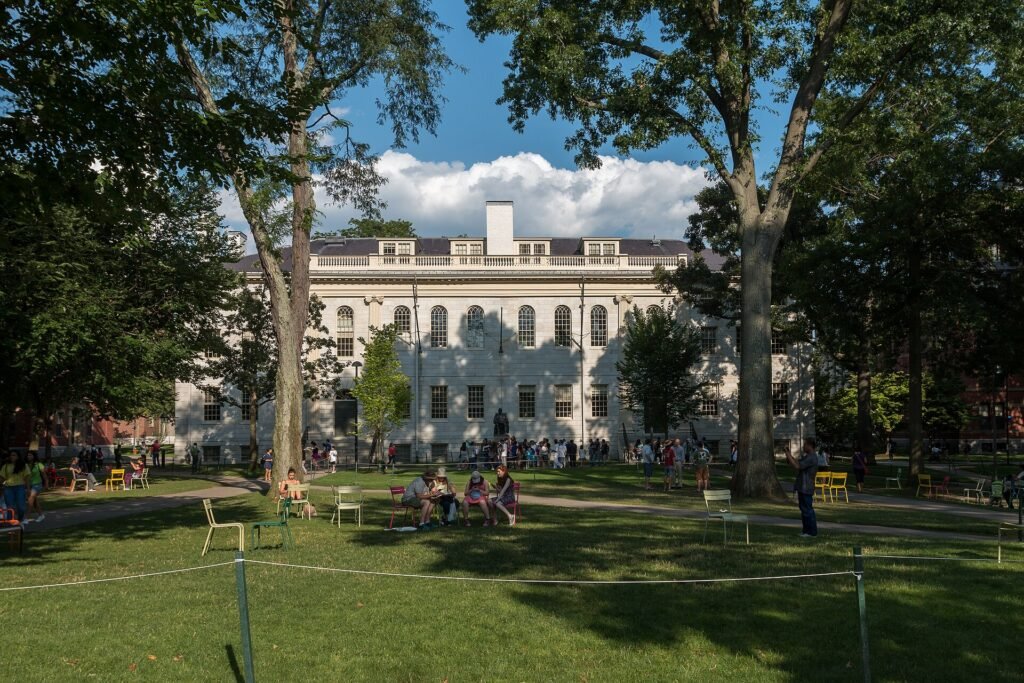
Featured image: Harvard Yard by Marco Almbauer, public domain, via Wikimedia Commons.




Responses