Study in South Korea: A Guide for African Students

More African students now study in South Korea, attracted by its technology and engineering programs, moderate tuition and the fully funded Global Korea Scholarship. Success depends on choosing the right admission route and taking the Korean language seriously.
This guide covers admission, scholarships, the student visa and work rules.
Quick answer: Apply directly to a Korean university or through the Global Korea Scholarship. With your admission certificate and financial evidence, apply for a D-2 student visa at the Korean embassy, then register as a foreign resident after you arrive.
How the Korean System Works
- Bachelor’s degrees take four years
- Master’s degrees take two years
- Doctorates take three years or more
- University language institutes offer intensive Korean courses
The main intake is in March, with a second intake in September. Universities run their own application rounds several months before each semester.
Admission Requirements
- Transcripts and certificates, often with apostille or consular confirmation
- A study plan and personal statement
- Recommendation letters
- Language results
- Evidence of finances
Language requirements depend on the program:
- Korean-taught programs ask for a Test of Proficiency in Korean (TOPIK) level
- English-taught programs ask for TOEFL or IELTS
Document legalization takes time in many African countries. Start it early using the application documents checklist.
Global Korea Scholarship
The Global Korea Scholarship (GKS) is the Korean government’s main award for international students. It is available for undergraduate and graduate study and generally covers:
- Tuition
- A monthly living allowance
- Airfare
- Medical insurance
- A year of Korean language training before the degree
There are two application routes:
- Embassy track: apply through the Korean embassy in your country, which holds a quota for your nationality
- University track: apply through a participating Korean university
You can use only one track in each cycle. Quotas, eligible fields and deadlines are published in the annual guidelines. Scholars are normally expected to reach a set TOPIK level during the language year.
Universities, companies and foundations also offer scholarships, often as tuition reductions linked to grades or TOPIK results.
Student Visa Steps
- Receive your certificate of admission.
- Prepare financial evidence in the form required by the university and embassy.
- Apply for a D-2 visa for degree study, or a D-4 visa for language training.
- Enter Korea and apply for your residence card within the required period.
- Enrol in National Health Insurance as instructed.
The amount of funds you must show is set by immigration guidance and applied by each university and embassy. Ask your university for the current figure.
Working During and After Study
International students need permission from immigration before taking part-time work. The number of hours allowed depends on your degree level, your Korean language ability and your academic standing, and students usually become eligible only after an initial period of study. Working without permission can lead to fines or loss of status.
After graduation, the D-10 job-seeking visa lets you stay while you look for work.
Common Mistakes
- Applying to both GKS tracks in the same cycle
- Leaving document legalization too late
- Ignoring Korean because the program is in English
- Taking part-time work before permission is granted
- Relying on unofficial GKS websites instead of the official guidelines
Frequently Asked Questions
Can I study in English?
Yes. Many graduate programs and some undergraduate programs are taught in English.
Do I need TOPIK before applying for GKS?
Not usually, because the scholarship includes language training. A TOPIK result can strengthen your application.
Where are the official GKS guidelines?
They are published on the Study in Korea website run by the National Institute for International Education.
Your Next Step
Decide between the embassy and university tracks, then check the current guidelines and your country’s quota. Verify every source with our guide to scholarship scams, because GKS is frequently imitated.
Sources
Reviewed: 2 October 2026. Scholarship guidelines and immigration rules change each year. Confirm current requirements with official sources.
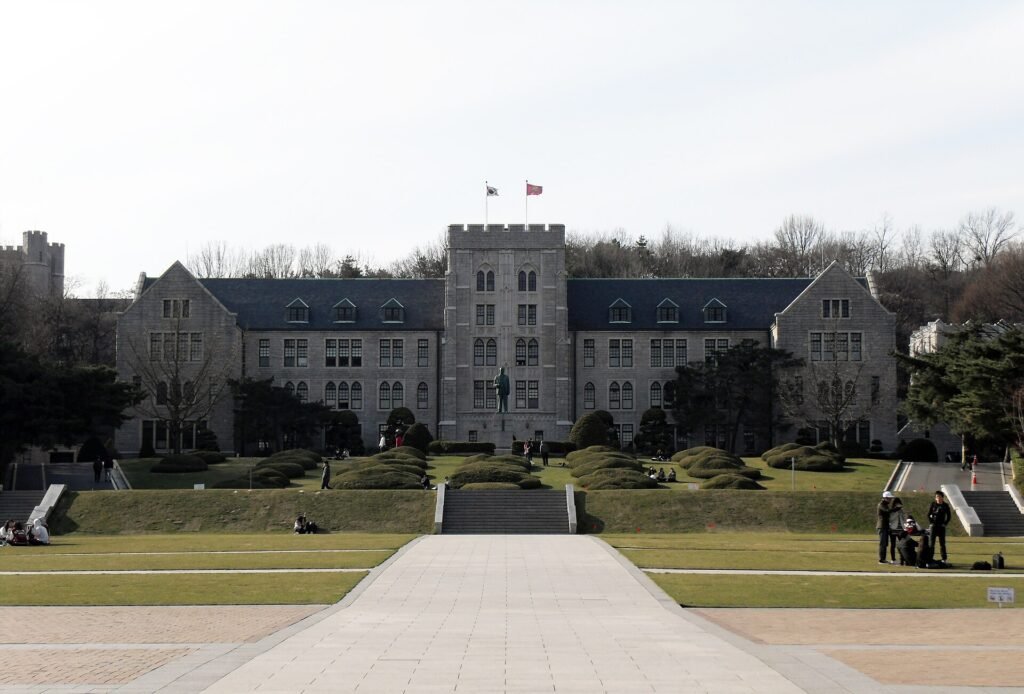
Featured image: Korea University Main Hall by Ksiom, CC BY-SA 3.0, via Wikimedia Commons (resized).




Responses